

Skip rate tells you one simple truth: people decide fast. If your Reel does not earn attention in the first seconds, viewers swipe. This post shows How to Reduce Skip Rate on Instagram with clear steps you can use today. You will learn what a good skip rate looks like, how the 3-second rule works, and how to use the 3/8/12 rule to improve retention.
Key Takeaways
- Lower skip rate by improving your first 1–3 seconds with one clear hook and one clear visual.
- Use the 3/8/12 rule to plan hooks (0–3s), value (3–8s), and payoff (8–12s).
- Cut friction with faster pacing, tighter edits, and fewer words on screen.
- Match content to the right audience with strong topic consistency and clear packaging.
- Track retention and skips inside Reels Insights and test one change at a time.
- Use captions, on-screen text, and audio that supports the message, not distracts from it.
Understand Skip Rate and Why It Matters
You reduce skip rate faster when you know what it measures and what causes it. Skip rate connects to retention. Retention drives distribution. Instagram pushes Reels that keep people watching.
What skip rate means on Instagram
- Skip usually means a viewer swipes away quickly, often before the Reel delivers value.
- High skip rate means your opening did not match viewer intent or your pacing felt slow.
- Low skip rate means your hook, topic, and first frames made people stay.
What is a good skip rate on Instagram?
- A “good” skip rate depends on niche, audience temperature, and Reel length.
- As a practical benchmark, aim for lower than your account average and improving week over week.
- For many creators, a skip rate that trends below 30–40% on short Reels often signals strong packaging. Some niches can perform well with higher skips if watch time and shares stay high.
- Use this rule: if your Reel gets strong reach but weak follows, your hook may be broad but your value may be unclear.
Where to find skip and retention signals in Insights
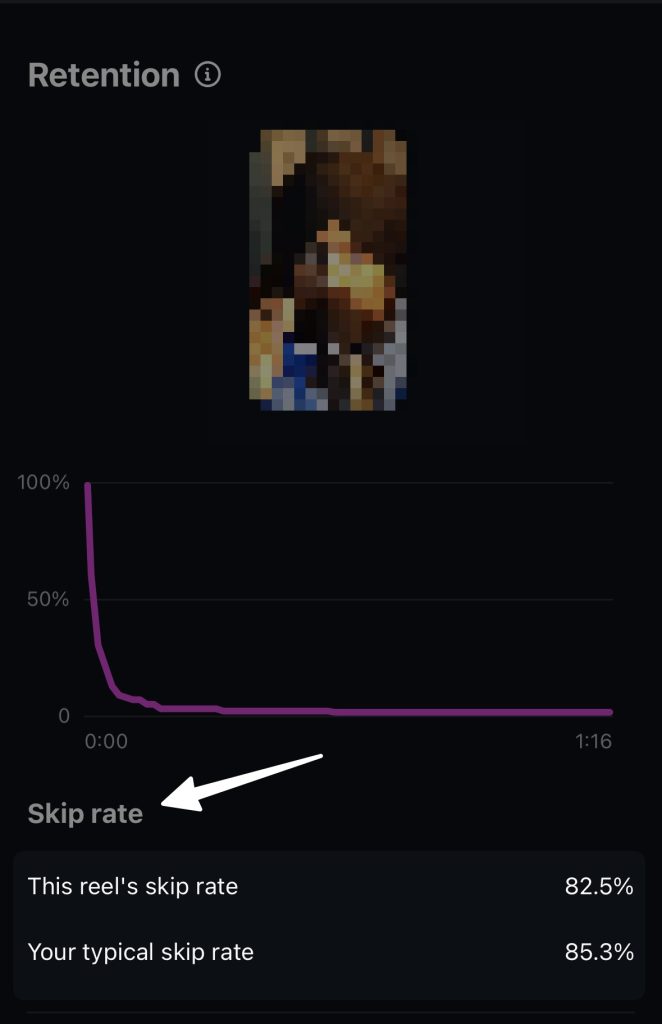
- Open the Reel → tap Insights.
- Check watch time, average watch time, and any retention or view rate past first 3 seconds metric available to your account.
- Compare Reels by topic, length, and hook style. Look for patterns, not one-offs.
Next, you need two simple rules that help you plan Reels that hold attention.
Use the 3-Second Rule and the 3/8/12 Rule
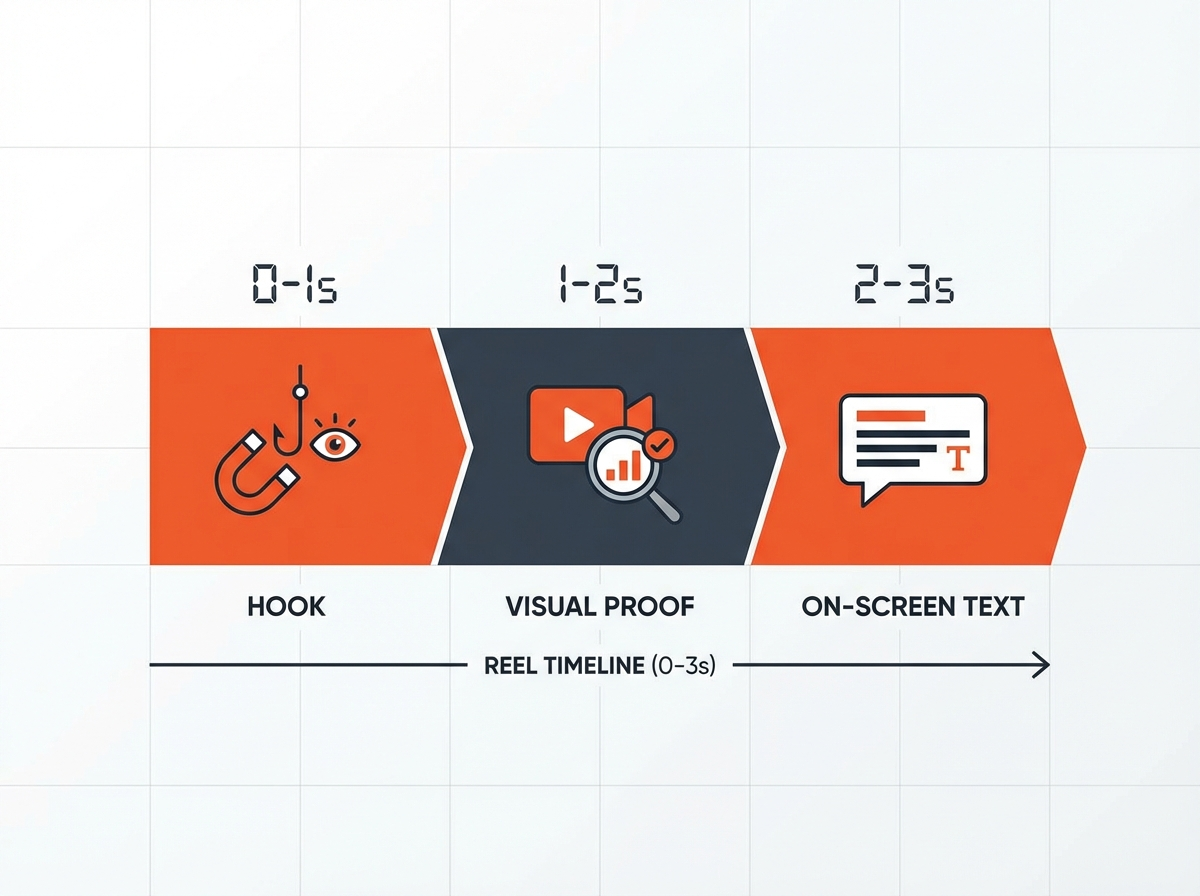
These rules give you a clean structure. They help you earn attention early and keep it through the payoff.
What is the 3 second rule on Instagram?
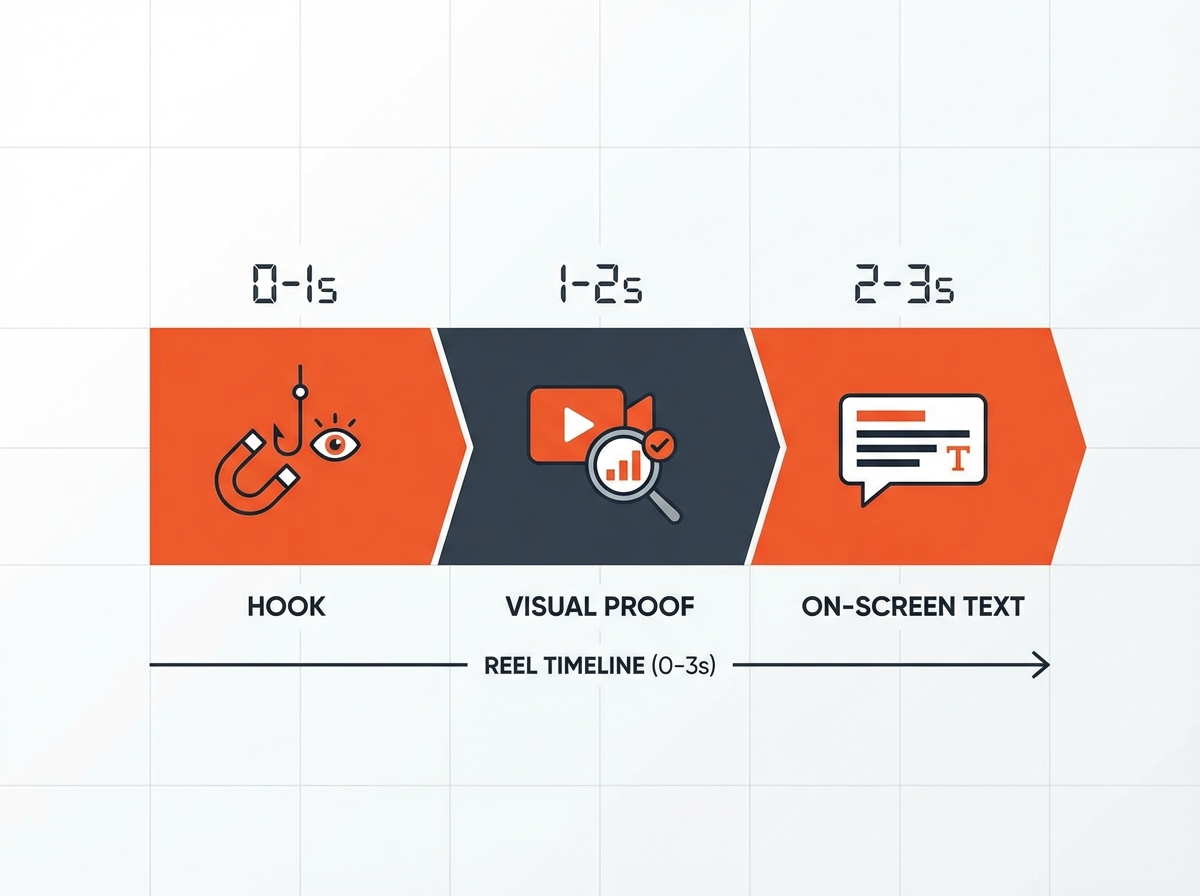
- You have about 3 seconds to confirm three things for the viewer: topic, benefit, and vibe.
- Your first frames must show the outcome or the problem fast.
- Your first line must sound like it belongs to the viewer’s life.
What is the 3/8/12 rule?
- 0–3 seconds: Hook. Show the result, the mistake, or the promise.
- 3–8 seconds: Proof and direction. Show steps, a demo, or a quick example.
- 8–12 seconds: Payoff. Deliver the key tip, the reveal, or the final result.
How to apply the rule to different Reel lengths
- 7–10 seconds: Compress. Hook in 1–2 seconds, payoff by second 6–8.
- 15–30 seconds: Repeat micro-hooks every 5–7 seconds with pattern changes.
- 30–60 seconds: Add chapters with on-screen labels. Keep each chapter under 8 seconds.
Now you are ready for the 10 actionable tips that reduce skip rate on Instagram Reels.
How to Reduce Skip Rate on Instagram? (10 Actionable Tips)
Each tip targets one reason people swipe: confusion, slow pacing, weak promise, or mismatch. Apply these tips in order. Test one change per week so you can see what caused improvement.
1) Start with a single clear hook in the first frame
- Use one sentence that states the benefit or problem.
- Use one visual that matches the hook. Do not show random B-roll first.
- Keep the hook specific. Specific hooks reduce skips.
Hook examples:
- “Stop doing this in your captions. It kills reach.”
- “3 edits that doubled my Reel retention.”
- “If your Reels get views but no follows, do this.”
Get 10,000+ Hooks here.
2) Show the outcome before the explanation
- Show the “after” first, then explain the “how.”
- Use a quick preview clip of the result or the final screen.
- Use proof fast: a before/after, a quick demo, or a clear metric.
3) Cut your intro words and remove context that viewers do not need
- Remove greetings, long setups, and “today I will…” lines.
- Replace context with a label on screen: “Step 1,” “Mistake,” “Fix.”
- Keep each spoken sentence under 8–10 words when possible.
4) Increase pacing with tighter edits and faster pattern changes
- Cut pauses and filler sounds.
- Change camera angle, zoom, or framing every 1.5–3 seconds.
- Use jump cuts to keep motion and energy.
- Keep clips short. Long clips increase skips.
Simple pacing checklist:
- Does something change every 2–3 seconds?
- Do you deliver the first tip by second 5–7?
- Do you remove every “um,” “so,” and long breath?
5) Use on-screen text that supports the message
- Put the hook in text within the first second.
- Use large, high-contrast text and keep it to one line when possible.
- Use keywords that match search intent: “Instagram skip rate,” “Reels retention,” “hook ideas.”
- Do not overload the screen with paragraphs. Too much text causes swipes.
6) Match the Reel to one audience and one intent
- Pick one viewer type: beginner, intermediate, or advanced.
- Pick one intent: learn, compare, decide, or do.
- Use language that fits that viewer. Avoid mixed levels in one Reel.
Quick test: If a viewer asks “Is this for me?” you lost them. Your first line must answer that question.
7) Build a strong “open loop” and close it fast
- Promise a payoff early: “At the end, I will show the exact template.”
- Keep the payoff inside the Reel. Do not hide it behind “follow for part 2” unless the topic truly needs it.
- Close the loop by second 12–20 for most Reels.
Open loop examples:
- “Most people fix the wrong metric. Here is the one that matters.”
- “This one edit stops people from swiping. Watch the last step.”
8) Improve audio clarity and remove distractions
- Use clear voice audio. Poor audio increases skip rate fast.
- Lower background music volume so it supports speech.
- Use captions for accessibility and silent viewers.
- Pick music that matches the mood. Do not pick music that fights your voice.
9) Use a simple structure viewers can predict
- Use formats that people recognize: “3 mistakes,” “Do this, not that,” “Step-by-step.”
- Label each step on screen. Clear structure reduces confusion and swipes.
- Keep the promise aligned with the steps. Do not change topics mid-Reel.
Structure templates:
- Hook → Step 1 → Step 2 → Step 3 → Recap → CTA
- Myth → Truth → Example → Fix → CTA
- Before → Why it fails → After → How to do it
10) Test hooks and covers like you test ads
- Create 3 hook variations for the same Reel concept.
- Post the best version, then reuse the concept with a new hook next week.
- Test cover text that states the outcome: “Lower skip rate in 10 minutes.”
- Track results in a simple sheet: topic, length, hook type, average watch time, skip signals.
These tips work best when you also avoid common mistakes that raise skip rate. Let’s cover those next.
Common Reasons People Skip Your Reels (And Quick Fixes)
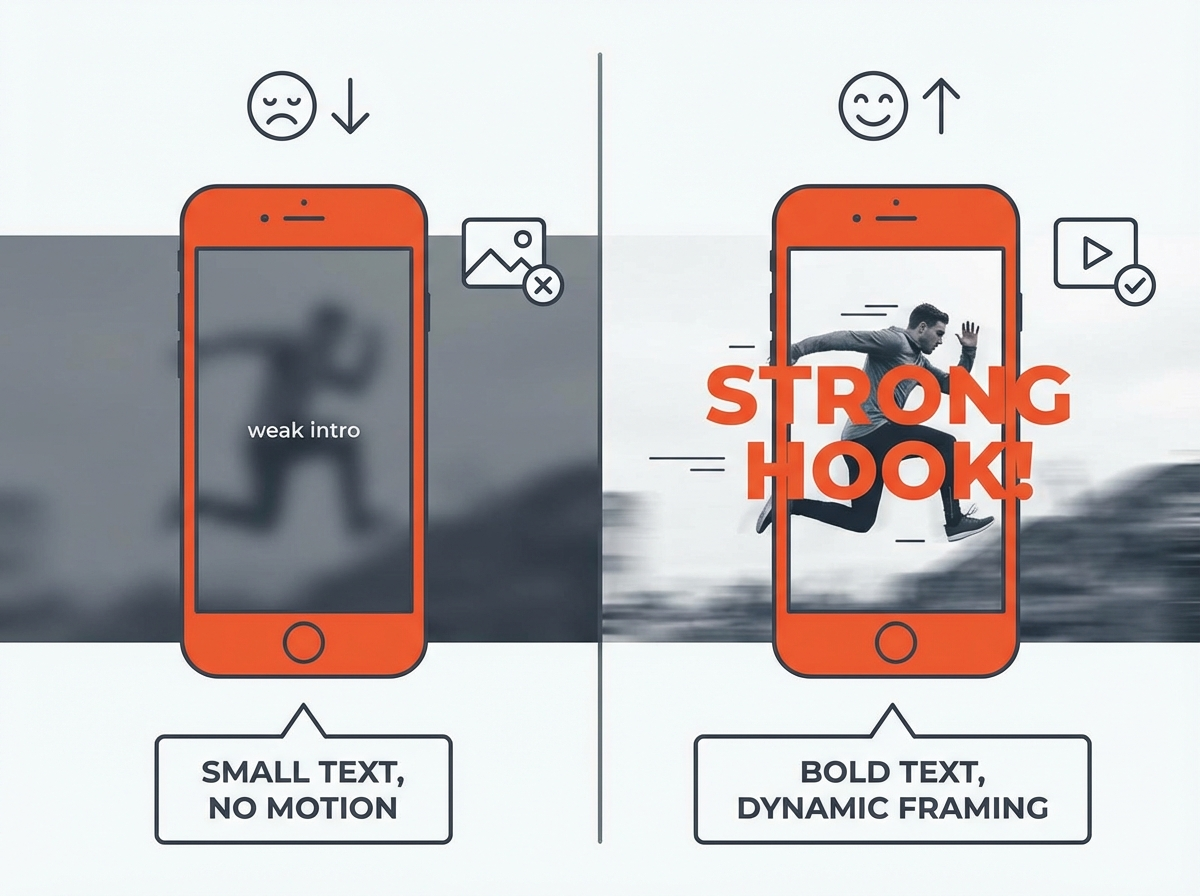
Many creators lose viewers for the same reasons. Fixing these issues can lift retention without changing your niche.
Reason 1: The first frame looks like an ad or a slideshow
- Fix: Start with a human face, a clear action, or a strong result screen.
- Fix: Use motion in the first second: point, hold an object, show the screen.
Reason 2: The Reel feels slow
- Fix: Cut the first 1–2 seconds. Many Reels start too late.
- Fix: Deliver the first tip earlier.
Reason 3: The promise does not match the content
- Fix: Make the hook smaller and more accurate.
- Fix: Add proof or an example that supports your claim.
Reason 4: Too many topics in one Reel
- Fix: Split it into a series, but make each Reel complete.
- Fix: Keep one goal per Reel: one skill, one mistake, one result.
Next, you need a simple workflow that makes these improvements repeatable.
A Simple Workflow to Lower Skip Rate in 7 Days
This workflow keeps you focused. It also helps you learn from Insights without guessing.
Day 1: Audit your last 10 Reels
- Write down the hook style for each Reel.
- Note Reel length and topic.
- Mark which Reels had the best average watch time and saves.
Day 2: Pick one winning topic and rebuild it
- Keep the topic the same.
- Write 5 hook options.
- Pick the clearest hook with the strongest outcome.
Day 3: Script with the 3/8/12 rule
- Write the first line for 0–3 seconds.
- Write the steps for 3–8 seconds.
- Write the payoff for 8–12 seconds.
Day 4: Record with strong first frames
- Record 3 takes of the first 3 seconds.
- Pick the take with the clearest voice and strongest movement.
Day 5: Edit for speed and clarity
- Remove pauses.
- Add on-screen text for the hook and each step.
- Add captions.
Day 6: Publish and pin the best comment
- Use a caption that repeats the promise in one line.
- Pin a comment that adds one extra tip or a link direction.
Day 7: Review Insights and log one learning
- Check average watch time and retention curve if available.
- Note where people drop off.
- Change one thing in the next Reel based on that drop-off point.
Now let’s answer the most common questions creators ask about lowering skip rate on Instagram.
Frequently Asked Questions (FAQs)
How to lower skip rate on Reels?
Start with a clear hook in the first frame, show the outcome early, and cut slow intros. Use tight edits, clear on-screen text, and one topic per Reel.
What is a good skip rate on Instagram?
A good skip rate is one that beats your account average and improves over time. Many creators aim for under 30–40% on short Reels, but the best benchmark is your own trend plus watch time and shares.
What is the 3/8/12 rule?
It is a Reel structure: hook in 0–3 seconds, value and direction in 3–8 seconds, and payoff in 8–12 seconds. It helps you keep viewers engaged early.
What is the 3 second rule on Instagram?
It is the idea that viewers decide in about 3 seconds if they will keep watching. Your first frames must show the topic and the benefit fast.
Do longer Reels increase skip rate?
Longer Reels can increase skips if pacing is slow or the payoff comes late. Long Reels can still perform well if you use chapters, pattern changes, and frequent micro-hooks.
Should I use trending audio to reduce skip rate?
Use audio that supports your message and audience. Trending audio can help discovery, but clear hooks, strong visuals, and fast value usually reduce skip rate more than the audio choice.
Final Thoughts
Skip rate drops when your Reel makes one clear promise and delivers it fast. Use the 3-second rule to earn attention, then use the 3/8/12 rule to keep momentum and land the payoff. Apply the 10 tips, track your Insights, and test hooks like a system. If you want faster progress, pick one topic that already performs well and publish three new versions with three different hooks this week.