
How the Instagram Algorithm Works in 2026 (and why it feels “different” now)
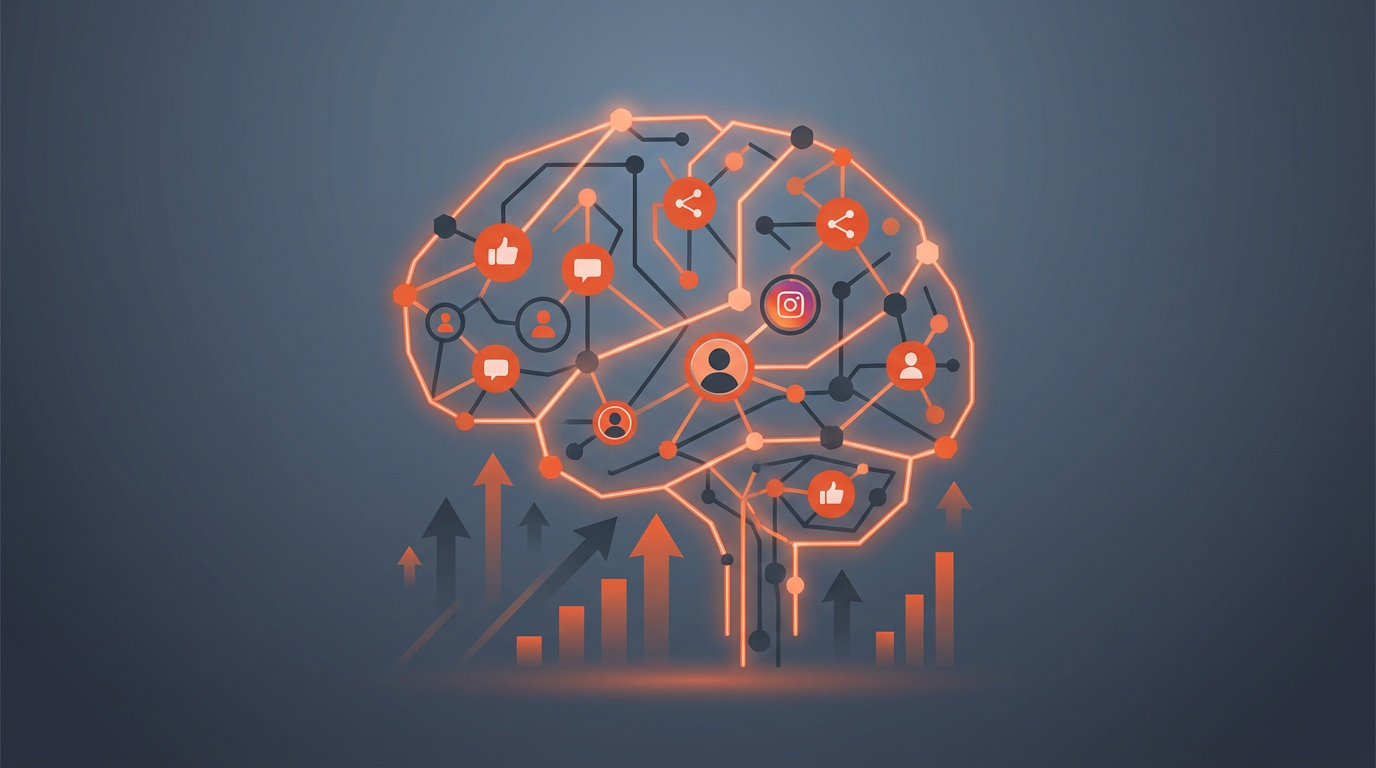
If Instagram reach feels less predictable than it used to, you’re not imagining it. In 2026, Instagram doesn’t run on one single “algorithm.” It uses multiple ranking systems that decide what each person sees across Feed, Reels, Stories, Explore, and even Search.
The simplest way to think about it: Instagram is constantly trying to answer one question for every user, every time they open the app:
“What content is this person most likely to enjoy right now?”
That “enjoy” can mean different things depending on the surface:
- Feed: content you’ll likely engage with from accounts you follow (plus some recommendations).
- Stories: content you’re likely to tap, reply to, or watch from people you’re closest to.
- Reels: content you’ll likely watch longer, rewatch, share, or follow the creator from.
- Explore: content you’ll likely discover and engage with based on your interests.
- Search: content and accounts that match your query and your past behavior.
So if you’re trying to “beat the algorithm,” the real goal is to align your content with the ranking signals Instagram already uses—then make it ridiculously easy for the right people to watch, save, share, and interact.
What Instagram is optimizing for in 2026
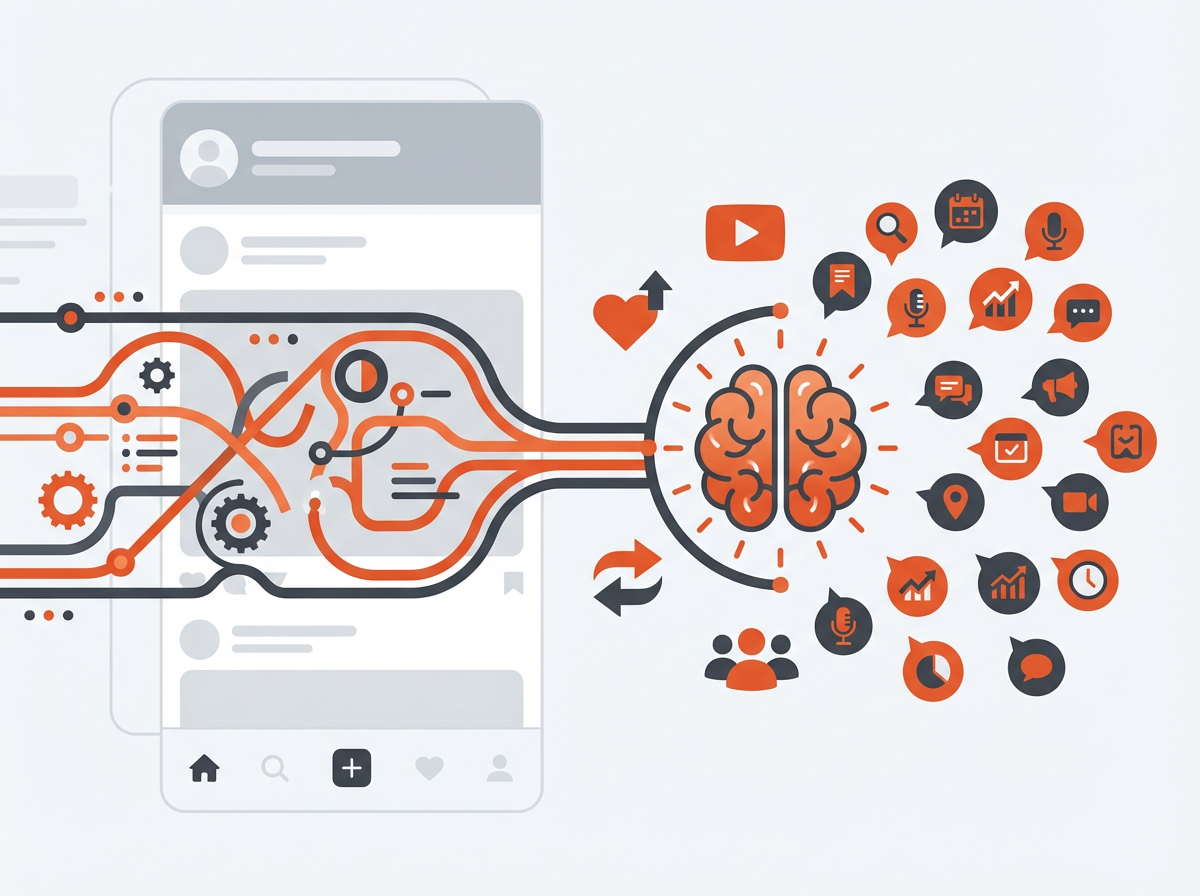
Instagram’s business depends on people spending time in the app and feeling like it’s valuable. In 2026, most ranking systems heavily reward content that drives:
- Watch time and retention (especially Reels)
- Meaningful engagement (comments, replies, DMs)
- Shares and saves (strong “value” signals)
- Session satisfaction (users don’t bounce after seeing your content)
- Relationship strength (how connected someone is to you)
- Interest matching (topics, formats, and audiences)
Here’s the key nuance: Instagram can love your content in one surface and ignore it in another. A post that performs well in Feed might flop in Explore. A Reel that gets high retention might explode even if you have a small following.
The core ranking signals (the stuff that actually moves the needle)
Instagram doesn’t publish a neat checklist, but the signals below show up consistently across official guidance, creator best practices, and what’s working right now.
1) User activity signals
Instagram watches what each user does: what they like, save, share, comment on, watch to completion, skip, hide, or report. It then predicts what they’ll do next.
2) Relationship signals
If someone regularly watches your Stories, replies to you, DMs you, or comments on your posts, Instagram treats you as “closer” and is more likely to show them your content again.
3) Content performance signals
Your post’s early performance matters. Not in a “you’re doomed if the first 10 minutes are slow” way—but Instagram does look at how content performs with a small sample, then expands distribution if it sees strong signals (retention, shares, saves, quality comments).
4) Content metadata signals
This includes captions, hashtags (still useful, but not magic), on-screen text, audio, and what Instagram can understand about the topic. In 2026, Instagram’s topic detection is much better—meaning your content can be categorized even if you don’t perfectly keyword-stuff your caption.
5) Creator/account signals
Consistency, past performance, and trust signals matter. Accounts that repeatedly publish original content, avoid spammy behavior, and earn positive engagement tend to get better distribution over time.
6) Negative signals (what suppresses reach)
Things that can reduce distribution include:
- Low retention (people skip quickly)
- “Hide,” “Not interested,” or report actions
- Engagement bait and spammy tactics
- Reposted watermarked content
- Misleading thumbnails/clickbait that disappoints
How the Instagram Feed algorithm works in 2026
Feed is still relationship-heavy. Instagram prioritizes content from accounts a user follows, but recommendations are more common than they used to be—especially when a post is performing strongly beyond your follower base.
What Feed tends to prioritize
- Likelihood of engagement: comments, likes, saves, shares
- Time spent: carousels and longer captions can increase dwell time
- Recency: freshness still matters, but it’s not everything
- Relationship: past interactions with the creator
Best content types for Feed in 2026
- Carousels (education, step-by-step, before/after, checklists)
- Single-image posts (strong hook + clear value)
- Short native videos (when the message is simple)
How the Instagram Reels algorithm works in 2026
Reels is still the biggest lever for non-followers reach. Instagram uses Reels to keep people watching, so the algorithm is heavily retention-driven.
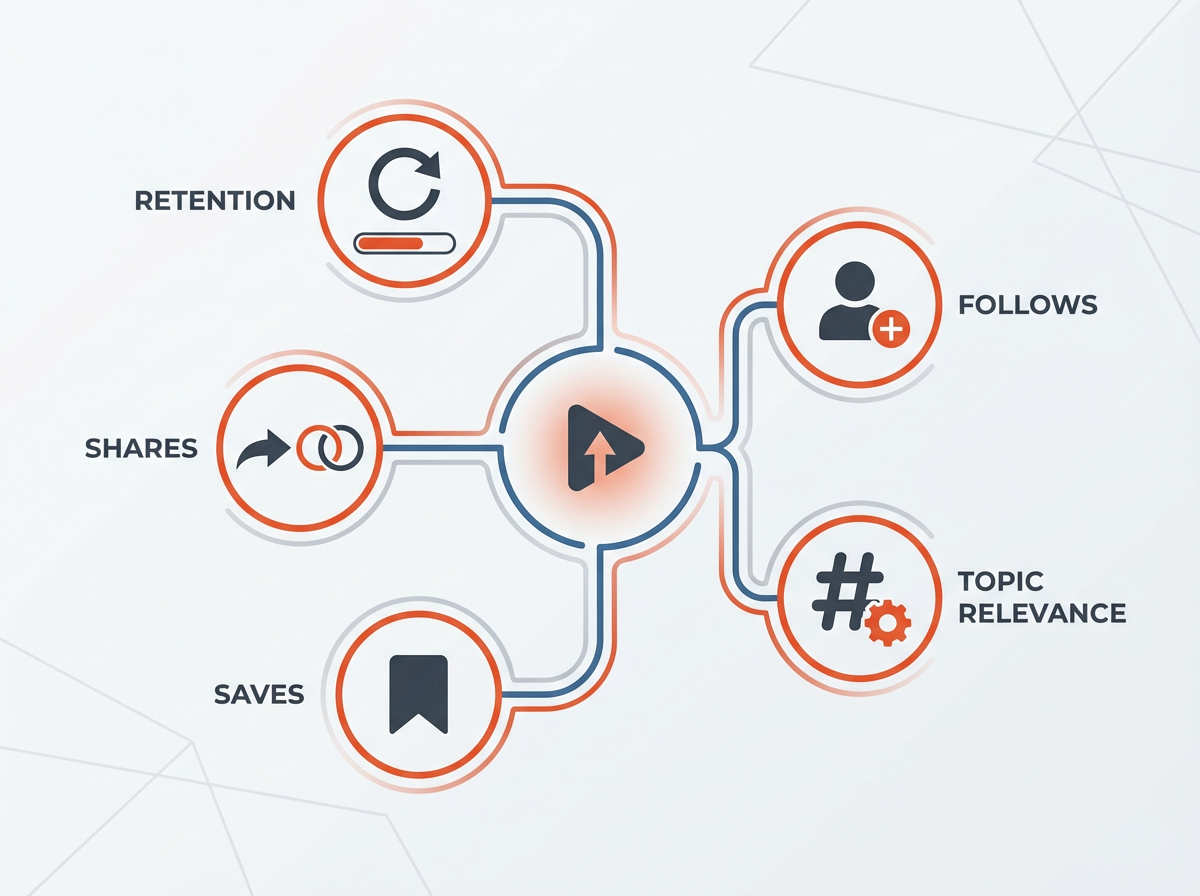
What Reels tends to prioritize
- Watch time and completion rate (and rewatches)
- Shares (especially to DMs)
- Saves (strong signal that it’s worth revisiting)
- Follows after viewing (big “this creator is valuable” signal)
- Audio + topic relevance (not just “trending,” but matched to the viewer)
What hurts Reels reach
- Slow openings (first 1–3 seconds don’t earn attention)
- Low clarity (viewer doesn’t understand what it’s about)
- Overly salesy content with no payoff
- Reused content with watermarks or low quality
How the Instagram Stories algorithm works in 2026
Stories is where relationship signals get built. It’s less about “going viral” and more about staying top-of-mind with your audience so your Feed posts and Reels perform better.
What Stories tends to prioritize
- Likelihood of tapping: do people open your story bubble?
- Replies and reactions: DMs are powerful relationship signals
- Completion: do people watch through or drop off?
Stories features that help in 2026
- Polls, quizzes, sliders (lightweight interaction)
- Question boxes (deeper interaction)
- Link stickers (useful for intent-based audiences)
How the Instagram Explore algorithm works in 2026
Explore is basically Instagram’s discovery engine for people who are already in a “browse mode.” It’s driven by interest matching: Instagram looks at what a user has engaged with, then recommends similar content from accounts they don’t follow.
What Explore tends to prioritize
- Topic similarity: does your content match what the user likes?
- Engagement velocity: how quickly it earns saves/shares/comments
- Quality signals: original, clear, non-misleading content
How Instagram Search works in 2026 (yes, it matters)
Search is quietly one of the most underrated growth channels. In 2026, Instagram search behaves more like a mini search engine: it uses keywords, account relevance, and engagement history to rank results.
What helps you show up in search
- Keyword-rich name field (not just your @handle)
- Clear niche terms in your bio
- Captions that naturally include the words people search
- Consistent content themes (so Instagram understands your topics)
20 actionable tips to work with the Instagram algorithm in 2026
These are built to be practical. You can implement most of them this week and see measurable improvements in reach, retention, and engagement.
Tip 1: Hook viewers in the first 1–3 seconds (especially for Reels)
Your opening should answer: “Why should I keep watching?” Use a bold on-screen headline, a surprising claim, or a clear outcome.
- Do: “3 mistakes killing your Reels reach (and the fix)”
- Avoid: long intros, logos, or “Hey guys…”
Tip 2: Design for retention, not just views
In 2026, retention is the multiplier. Tighten pacing, remove filler, and make every second earn attention.
- Use quick cuts and pattern interrupts every 2–4 seconds
- Tease what’s coming (“Wait for #3…”) but actually deliver
Tip 3: Prioritize shares and saves with “utility content”
Likes are nice, but saves and shares are the strongest “this is valuable” signals. Create content people want to keep or send to a friend.
- Checklists
- Templates
- Step-by-step tutorials
- Swipeable carousels with clear takeaways
Tip 4: Use carousels to increase dwell time in Feed
Carousels naturally increase time spent because people swipe. That extra dwell time can improve Feed distribution.
- Slide 1: strong promise
- Slides 2–8: clear steps
- Last slide: summary + CTA
Tip 5: Write captions that earn comments (without engagement bait)
Instead of “Comment YES,” ask a real question that invites a real response.
- “Which of these have you tried?”
- “What’s your biggest challenge with X right now?”
Tip 6: Get more DMs by using Stories prompts
DMs and replies are powerful relationship signals. Use Stories to start conversations.
- “Reply with your niche and I’ll suggest one content idea.”
- “Want my checklist? DM me ‘CHECKLIST’.”
Tip 7: Post consistently enough for the algorithm to learn you
Consistency helps Instagram understand your topics and helps your audience build habits around your content.
- Pick a schedule you can sustain for 90 days
- Batch content weekly to avoid gaps
Tip 8: Double down on 2–3 content pillars
Accounts that talk about everything confuse both the audience and the algorithm. Choose 2–3 pillars and rotate them.
- Pillar example: education, behind-the-scenes, proof/case studies
Tip 9: Make your profile “algorithm-ready” (so follows convert)
Even if a Reel reaches thousands of non-followers, growth stalls if your profile doesn’t convert.
- Bio: who you help + how + proof
- Pinned posts: start here, best results, best tutorial
- Highlights: FAQs, offers, social proof
Tip 10: Use trending audio strategically (not blindly)
Trending audio can help discovery, but only if the content matches the audience. In 2026, relevance beats trend-chasing.
- Use trending audio at low volume under voiceover
- Prioritize clarity of message over the trend
Tip 11: Optimize your on-screen text for topic clarity
Instagram can interpret on-screen text. Make it obvious what the content is about.
- Use big, readable headlines
- Keep it to one main idea per Reel
Tip 12: Treat hashtags like labels, not a growth hack
Hashtags still help categorization, but they won’t save weak content. Use 3–8 highly relevant tags.
- Mix: niche tags + problem tags + format tags
- Avoid: irrelevant high-volume tags
Tip 13: Post when your audience is active (then test)
Timing isn’t everything, but it can improve early engagement. Use Insights as a starting point, then test two time slots for 2–3 weeks.
Tip 14: Improve your “first frame” thumbnail
Your thumbnail is your billboard in Reels grid and Explore. Make it readable and outcome-based.
- Use a 3–6 word promise
- High contrast text
- Consistent brand style
Tip 15: Build series content to train repeat viewing
Series formats create anticipation and improve return visits—both great for algorithmic distribution.
- “Instagram Growth Myth #1, #2, #3…”
- “30 days of content hooks”
Tip 16: Use Collabs to borrow trust and reach
Collab posts and Reels can show to both audiences. Choose partners with overlapping audiences (not just big follower counts).
- Co-create a tutorial
- Do a mini case study together
- Share a checklist and tag each other as collaborators
Tip 17: Encourage “meaningful comments” with specificity
Comments that are longer and specific tend to be stronger signals than one-word replies.
- Ask for context: “What niche are you in?”
- Ask for a choice: “Which hook would you use—A or B?”
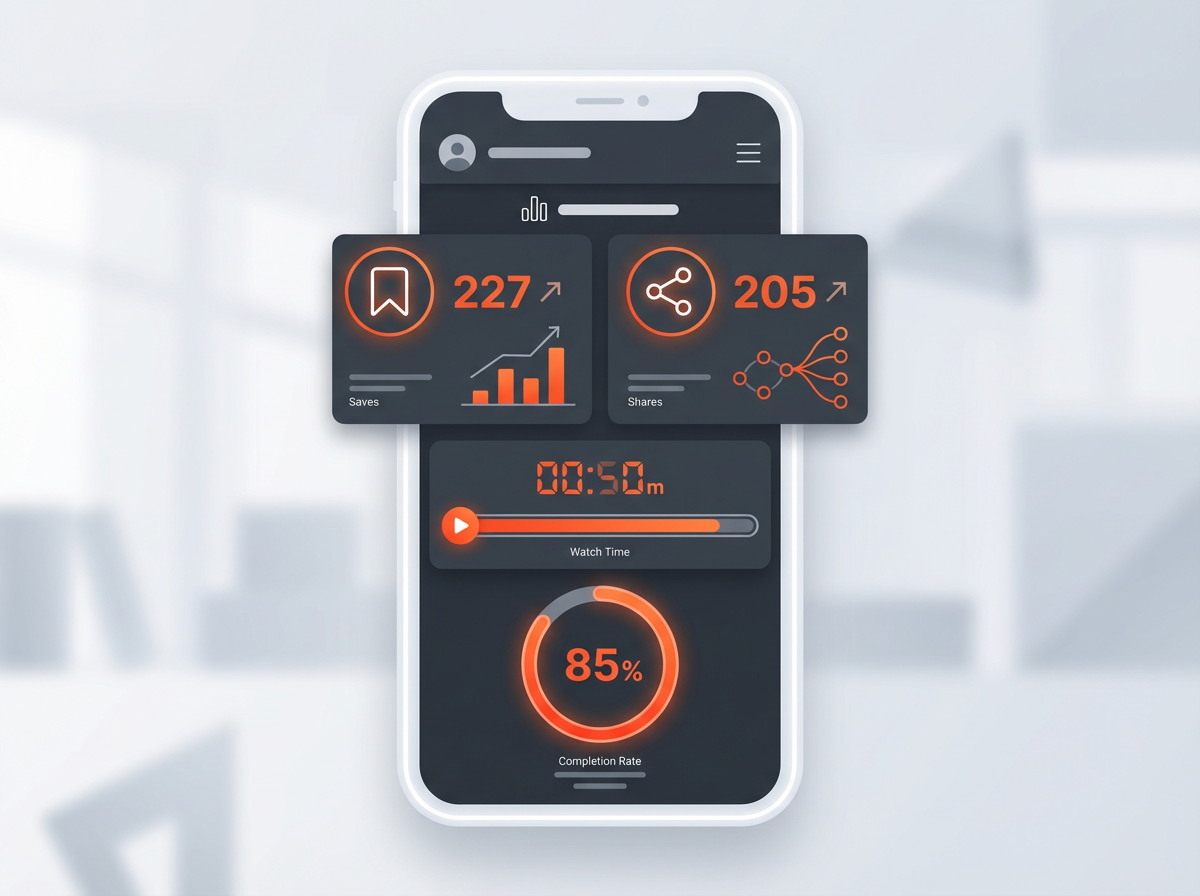
Tip 18: Audit retention and saves weekly (not vanity metrics)
Pick 3 metrics per format:
- Reels: average watch time, completion rate, shares
- Feed: saves, shares, profile visits
- Stories: replies, taps forward/back, exits
Then do more of what drives those metrics.
Tip 19: Refresh your best performers (don’t reinvent every time)
If a topic worked once, it can work again with a new hook, updated examples, or a different format.
- Turn a high-save carousel into a Reel
- Turn a high-retention Reel into a carousel checklist
Tip 20: Avoid the “spam signals” that quietly limit distribution
In 2026, Instagram is quick to downrank content that feels manipulative or low-quality.
- Avoid engagement bait
- Avoid repeated copy-paste comments
- Avoid reposting watermarked TikToks
- Don’t overdo repetitive hashtags or identical captions
Common myths about the Instagram algorithm in 2026
Myth: “Shadowbans are why my reach dropped.”
Sometimes reach drops because content performance dropped (retention, saves, shares) or because your audience behavior changed. Instead of guessing, check Insights and compare your last 10 posts by retention and saves.
Myth: “Hashtags don’t matter at all.”
Hashtags matter as context, but they’re not the main driver. Think of them as a supporting signal, not the engine.
Myth: “Posting more always fixes it.”
More content can help you learn faster, but low-quality volume often hurts. Better: post consistently and improve one variable at a time (hook, pacing, topic, CTA).
A simple weekly action plan (so you actually use these tips)
Monday: Research + plan
- Pick 3 topics from your content pillars
- Write 5 hooks for each topic
Tuesday: Produce 2 Reels
- Focus on retention (tight edits, clear payoff)
- Add on-screen text for topic clarity
Wednesday: Publish 1 carousel
- Make it save-worthy (checklist or steps)
- End with a specific question to earn comments
Thursday: Stories relationship day
- Run a poll + question box
- Reply to every DM
Friday: Collaborate or remix
- Invite a Collab partner
- Or refresh a top-performing topic with a new hook
Weekend: Review Insights
- Identify top 2 posts by saves/shares/retention
- Decide what you’ll repeat next week
Conclusion: Work with the Instagram algorithm in 2026, not against it
The Instagram algorithm in 2026 isn’t a mystery switch that randomly blesses or blocks accounts. It’s a set of ranking systems designed to predict what each person will enjoy—based on behavior signals like retention, saves, shares, and relationship strength.
If you take one thing from this guide, let it be this: make content that’s easy to understand fast, satisfying to consume, and valuable enough to save or share. Do that consistently, and the algorithm has every reason to distribute your work.
Call to action: Want a faster win? Pick three tips from the list above (one for Reels, one for Feed, one for Stories) and commit to them for the next 14 days. Then review your Insights and double down on what moved saves, shares, and watch time.