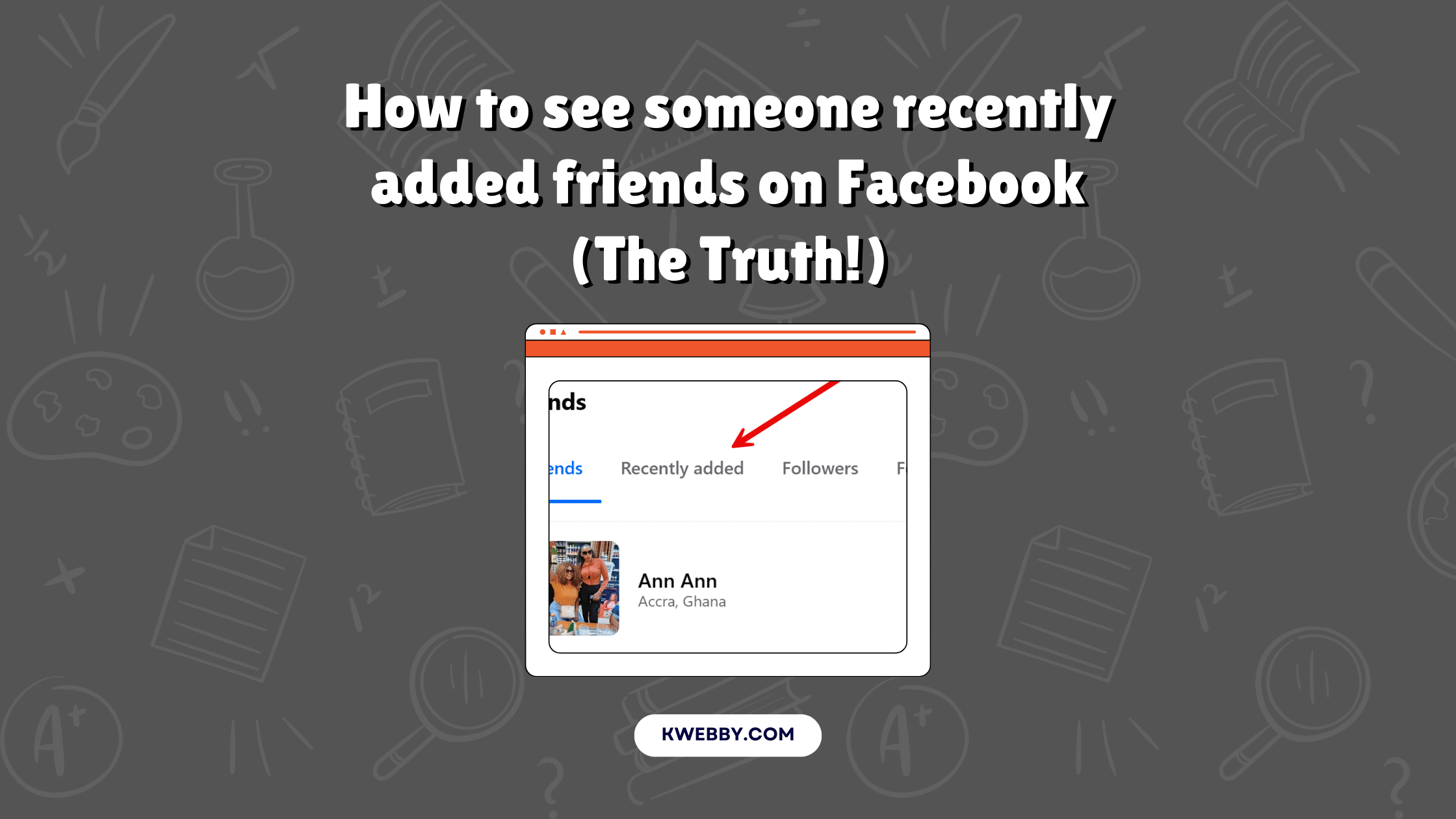
To check someone’s recently added friends on Facebook, open their profile, go to Friends, and look for Recently Added. Use it only if Facebook actually shows that option. You won’t get the same controls on every profile or device, and you can’t use this method to reveal a private friends list.
If you’re looking for your own recent connections, I’d start with your Activity log. That’s a different task from checking another person’s profile, and separating the two will save you a lot of searching through the wrong menus.
Below, I’ll explain what to check on desktop and mobile, what a missing tab means, and which conclusions you should avoid drawing from the order of a friends list.
Key Takeaways
- Check the visible controls: another person’s profile may offer a Recently Added option under Friends, but availability isn’t guaranteed.
- Your account has a separate route: use Activity log to review your own connection activity and the dates shown there.
- Mobile menus can differ: don’t assume an option in your own Friends screen is available on someone else’s profile.
- List position isn’t a timestamp: the first person in an ordinary friends list isn’t proof of the newest friendship.
- Skip hidden-friends trackers: don’t hand over your password, login cookies or account access to a tool promising private activity.
Can You See Someone’s Recently Added Friends on Facebook?
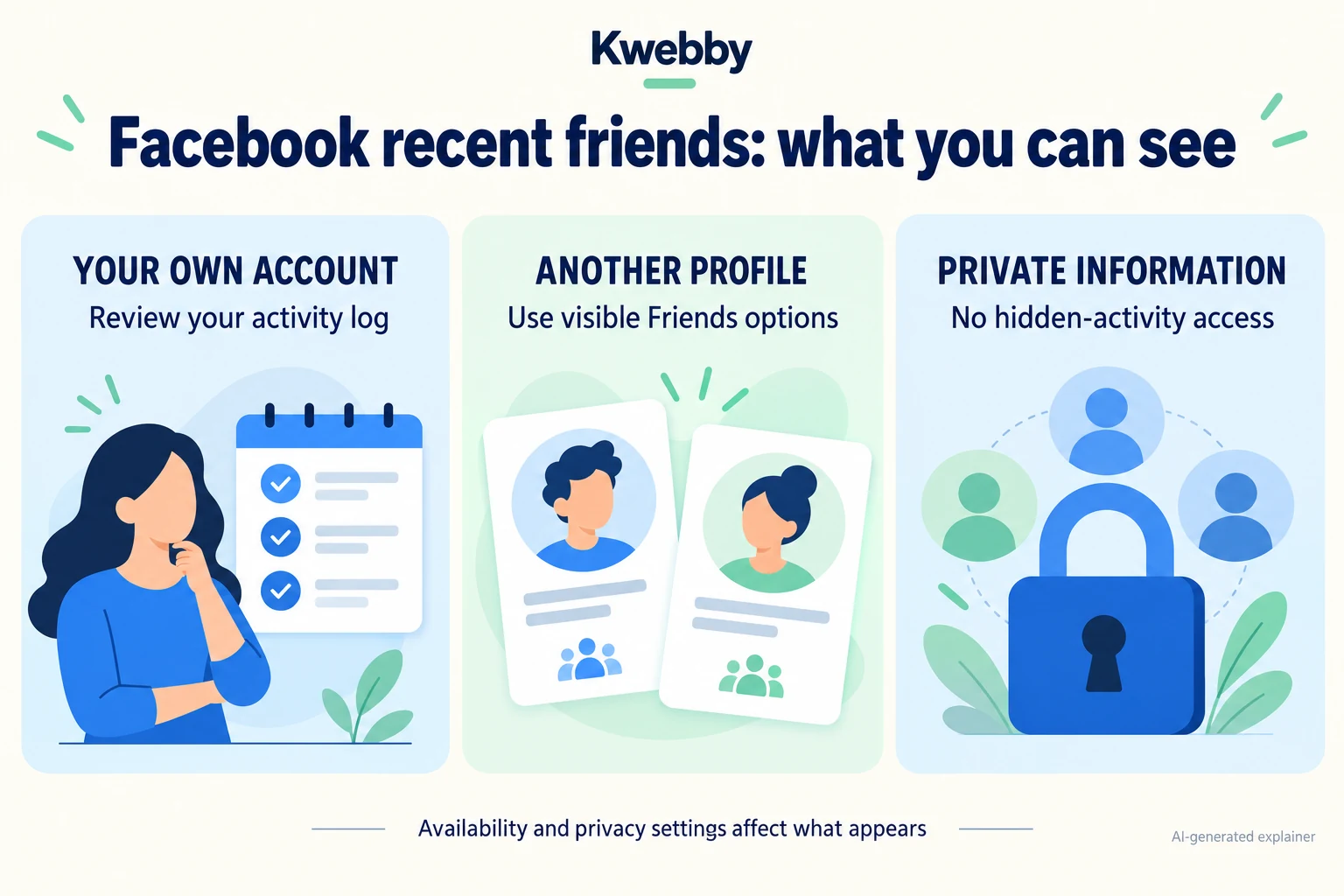
You can check the information Facebook makes visible to you on that person’s profile. A Recently Added tab, when present and working, is one way to narrow that visible list.
I wouldn’t treat it as a complete friendship history. It doesn’t give you access to the person’s private Activity log, and a list without explicit dates doesn’t establish exactly when each connection began.
Some search results about recent Facebook friends actually discuss the newest posts from existing friends. Check that the instructions cover friendship connections before you follow them.
Before you follow a tutorial, check whose account it describes. A screenshot of the author’s own Friends page can show controls that you won’t see when visiting another person. The same caution applies when a guide switches between the app and desktop website without explaining the difference.
Facebook’s privacy settings documentation also notes that some settings depend on profile type. Your screen is the deciding factor when a tutorial’s buttons don’t match.
How to Check Recently Added Friends on Desktop
If you have a computer available, here’s the profile view I’d check first. This is a conditional route, so don’t spend time hunting for a button that Facebook hasn’t displayed.
- Open Facebook and sign in to your own account. Use the normal Facebook website rather than a third-party viewer.
- Open the person’s profile. Search for their name and make sure you’ve selected the right person.
- Open Friends. Look for the profile’s Friends tab or its friends section. The general Friends shortcut in Facebook’s navigation is a different screen.
- Check the available tabs. If you can see Recently Added, select it. If the profile has an overflow menu beside the tabs, you can check its visible options too.
- Look at what actually changes. If the selection opens a filtered view, review that view. If it simply returns you to the ordinary list, you haven’t established that the list is sorted by recent additions.
If the friends section is unavailable, shows only mutual connections, or has no Recently Added control, stop at the information you’re allowed to see. Repeatedly refreshing the profile won’t turn a restricted list into a complete one.
Also, keep the wording of the interface in mind. All Friends, Mutual Friends and Recently Added describe different views. Don’t use one as a substitute for another when the question is when a friendship started.
How to Check Recently Added Friends on Mobile
On iPhone or Android, open the Facebook app, visit the person’s profile, and open their Friends section or See all friends, if displayed.
Now inspect the options on that particular screen. If Facebook offers a recent-additions filter there, you can use it. If it doesn’t, the app hasn’t given you that route for this profile.
This is where many instructions go wrong. They show a mobile sorting menu from the account owner’s own friends list, then imply you can use the same menu on anybody else’s profile. Those are different views.
What About Requesting the Desktop Website on Your Phone?
You can try opening Facebook in your usual mobile browser and using the browser’s desktop-site option. It may show a different layout, but I wouldn’t promise that it will reveal a Recently Added tab.
The layout change doesn’t expand what the account lets you see. If the desktop view still lacks the option, use the available information or leave it there. Installing another browser or a special extension isn’t a necessary next step.
If you meant friends you recently added, use the next section instead. Your own account history is the more useful place to look.
How to Find Your Own Recently Added Facebook Friends
For your own activity, open Activity log and look for connection-related categories. Meta describes this as the place to review and manage your Facebook activity, and its Activity log overview says only you can see the log.
- Switch to the correct Facebook profile. Make sure you’re checking your personal profile rather than a Page you manage.
- Find Activity log. Look in Settings & privacy or your profile’s options menu. If your version offers settings search, search for Activity log.
- Look for connection activity. Check the categories and filters for labels such as Connections, Friends or Added friends. The wording and grouping can differ.
- Choose the relevant activity type. Adding a friend, sending a request and receiving a request are different events. Read the entry rather than treating every request as an accepted friendship.
- Use the available date filters. Start with the period you remember and read any dates attached to the matching entries.
If the specific category isn’t present, don’t assume you need a paid tracker to unlock it. Use the categories Facebook actually offers, or check its account-information tools for your own profile.
Meta’s explanation of its data-access tools describes Activity Log, Access Your Information and account downloads as ways to access your own information. It also explains that information involving other people is subject to privacy limits.

If your next step is cleaning up your own list, I’ve covered the available options in how to remove Facebook friends. Check the people you want to remove before making changes.
Why Is Recently Added Missing or Not Working?
A missing tab doesn’t tell you why it’s missing. Here are the checks I’d make before drawing a conclusion:
- Whose profile are you viewing? Controls for managing your own connections can differ from the information shown to a visitor.
- Which screen is open? The general Friends area, a profile’s Friends tab and mutual friends aren’t interchangeable.
- What does this interface offer? The app and website may present different controls. Check the options actually visible to you.
- Did the filter work? A tab that returns you to All Friends hasn’t confirmed a recent-additions view.
- Is Facebook showing an error? If the page itself won’t load, deal with that problem separately. A loading failure says nothing reliable about somebody’s friendships.
You shouldn’t conclude that someone has made no new friends, deliberately hidden a particular person, or changed their settings just because the tab disappeared. An absent control doesn’t establish any of those things.
I’d also avoid guides that promise a fixed window, such as 3.5 weeks or 30 days, without showing reliable evidence for that limit. The official sources reviewed for this guide don’t establish one universal Recently Added cutoff.
Does Facebook Put the Newest Friends First?
Don’t assume that an ordinary friends list is in date order. Unless the screen explicitly identifies the view as recent additions or supplies dates, its position alone doesn’t answer when two people became friends.
For example, seeing someone first today and farther down tomorrow doesn’t prove a new friendship or a change in the relationship. You have observed a change in the displayed order, not a dated friend-add event.
Mutual friends are just as easy to misread. Sharing a friend with someone doesn’t show when either connection began. Likewise, suggestions in People You May Know aren’t a log of accepted requests.
When the date matters, look for an explicit record in your own account or ask the people involved. I wouldn’t use the order of a list to settle a personal disagreement.
How to Control Who Can See Your Friends List
To review your own friends-list audience, use the setting named Who can see your friends list? Meta’s Friends-section privacy instructions give this desktop path:
- Click your profile picture in the upper-right corner.
- Open Settings & privacy, then Settings.
- Under Audience and visibility, choose How people find and contact you.
- Select Who can see your friends list? and choose your audience.
On mobile, look for the same setting in Facebook Settings. If the menu labels differ, use settings search when available.
Only me limits the full list on your profile to you. However, Meta says friendships may remain visible through another person’s profile, and visitors may still see mutual friends. This setting can’t promise that every sign of a friendship disappears everywhere.
Hiding a post is a separate action. If that’s what you’re trying to manage, see how to unhide a Facebook post for the controls associated with your own hidden posts.
Should You Use a Facebook Recent Friends Tracker?
I wouldn’t use a service that promises access to private friends or hidden friendship history. Treat requests for your Facebook password, login cookies, a browser session or broad account permissions as a warning.
A tool comparing publicly visible lists still can’t establish a complete private history. A name appearing in a new observation doesn’t, by itself, prove that the friendship began at that moment. Changes in what a viewer can see can also change what a list comparison reports.
Be especially cautious when a site shows an enticing preview, then asks you to pay or install an extension to reveal the result. A marketing claim doesn’t verify either the underlying data or the access being promised.
You don’t need to give a tracker account access to check the options Facebook already makes available. Use the official controls and respect the limit when information isn’t shared with you.
Frequently Asked Questions
Can I Open Someone Else’s Activity Log?
No. Facebook’s Activity log is private to its account owner. Seeing a public post or a visible friendship doesn’t give you access to that person’s log.
Why Can’t I See Recently Added on My iPhone or Android?
Check whether you’re viewing your own friends or another person’s profile, then look at the options available on that screen. A desktop tutorial doesn’t guarantee the same mobile control. If the option is missing, you can’t complete that route as described.
How Long Does a Friend Stay in Recently Added?
I couldn’t verify one universal time limit in the official documentation reviewed. Don’t treat claims about a fixed number of days as a dependable rule for every account.
Can I Find the Exact Date Someone Added a Friend?
A visible list without dates won’t establish an exact date. For your own connections, check any relevant Activity log entry and read the event it records. Don’t confuse the date of a sent request with the date it was accepted.
Does an Empty Recently Added List Mean No New Friends?
No. The empty view alone doesn’t establish what happened. You would need reliable additional information before making that claim.
Can Desktop Mode or an Extension Reveal Hidden Friends?
Changing the layout doesn’t give you permission to view private information. Don’t rely on an extension’s promise to expose it or give the extension your login details to find out.
Final Thoughts
Start with the person’s visible Friends section and use Recently Added only when Facebook offers a working option. For your own history, use Activity log and read the entries carefully.
The useful habit is to separate what the screen shows from what you’re guessing. A list position, missing tab or mutual friend isn’t enough to reconstruct somebody’s private activity.