You can sometimes find an old Instagram profile or post in the Wayback Machine. The catch is that a saved date can lead to a login screen, a partly loaded page, or photos that never appear.
I’d use it to check for a surviving public copy. If you’re trying to recover something from your own account, check Instagram’s recovery options too. Here’s how to choose the right route, search an exact URL, and decide whether the result is useful.
Key Takeaways
- Search the exact profile or post URL, including a former username if you know it
- Open the snapshot and check the detail you need. A calendar entry alone doesn’t confirm the content survived
- An old public copy may remain after a post is deleted, but only if usable content was captured earlier
- For your own missing content, check Archive, Recently Deleted, original files, and existing backups
- Keep an independent copy of anything important instead of relying on a bookmark
Does the Wayback Machine Work on Instagram?
Sometimes. A useful snapshot might show an old bio, profile name, follower count, caption, or image. What you can retrieve depends on that particular capture.
Start with what you want to find:
- An old public profile: check its profile address and any known previous address
- A particular post: find its individual post link, rather than expecting a profile snapshot to contain everything
- Your own missing photo or Story: check your account’s recovery tools and original files first
- Private content: ask the account owner for access or a copy
A profile snapshot isn’t a complete account backup. It can contain the profile header while the posts below it are missing.
Research by Rachel Zheng and Michele C. Weigle, published in 2024, examined 75,378 captures from 25 highly followed accounts and documented substantial replay problems, including login redirects. That’s historical research, not a current success rate for your account. It does explain why capture counts can be misleading. Read the Instagram archiving study.
What You Need Before You Search
Gather the exact address and roughly when the content was available. I’d check old bookmarks, messages containing the link, and public articles that embedded or referenced the post.
A profile address looks like https://www.instagram.com/username/. An individual post address often uses /p/ followed by a shortcode. These are address patterns, not examples of working captures.
If the account changed its username, try the historical profile address too. Today’s handle may not match the address used when the page was archived.
Don’t assume a matching name proves it’s the same person. Compare the visible profile details and the context of the original link before using anything you find.
How to Use the Wayback Machine for Instagram
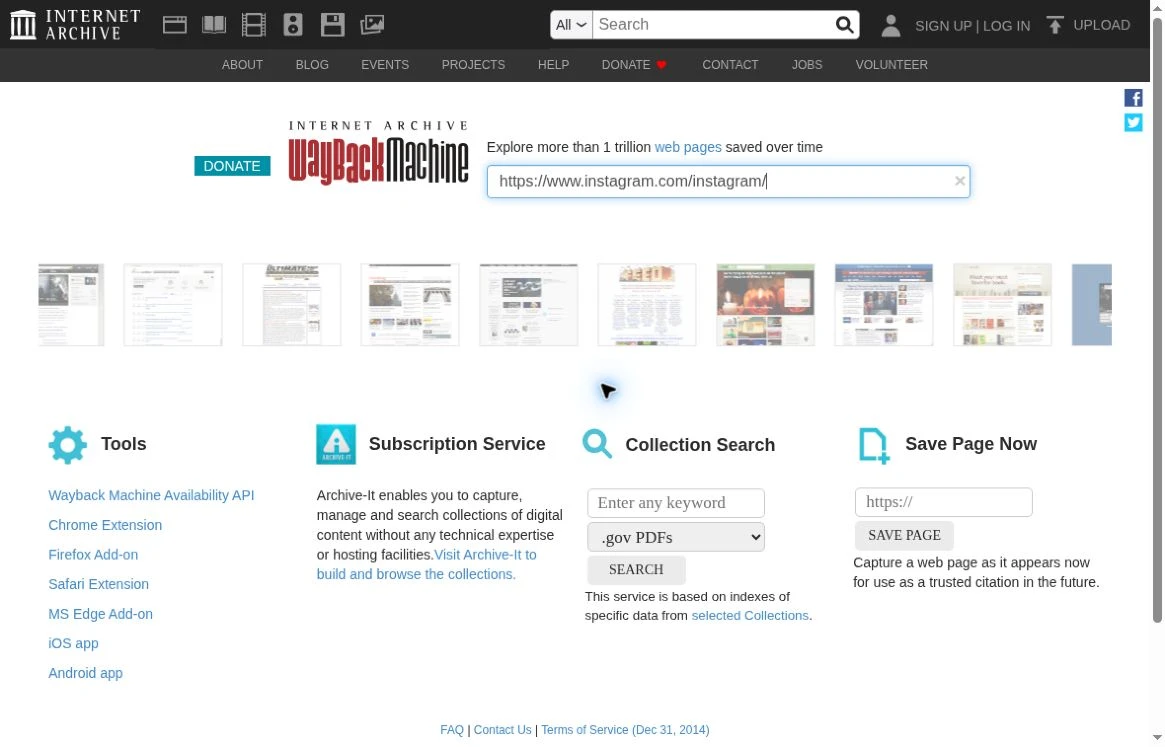
Use this sequence for an existing public profile or post URL. You don’t need to submit a new capture to search the archive.
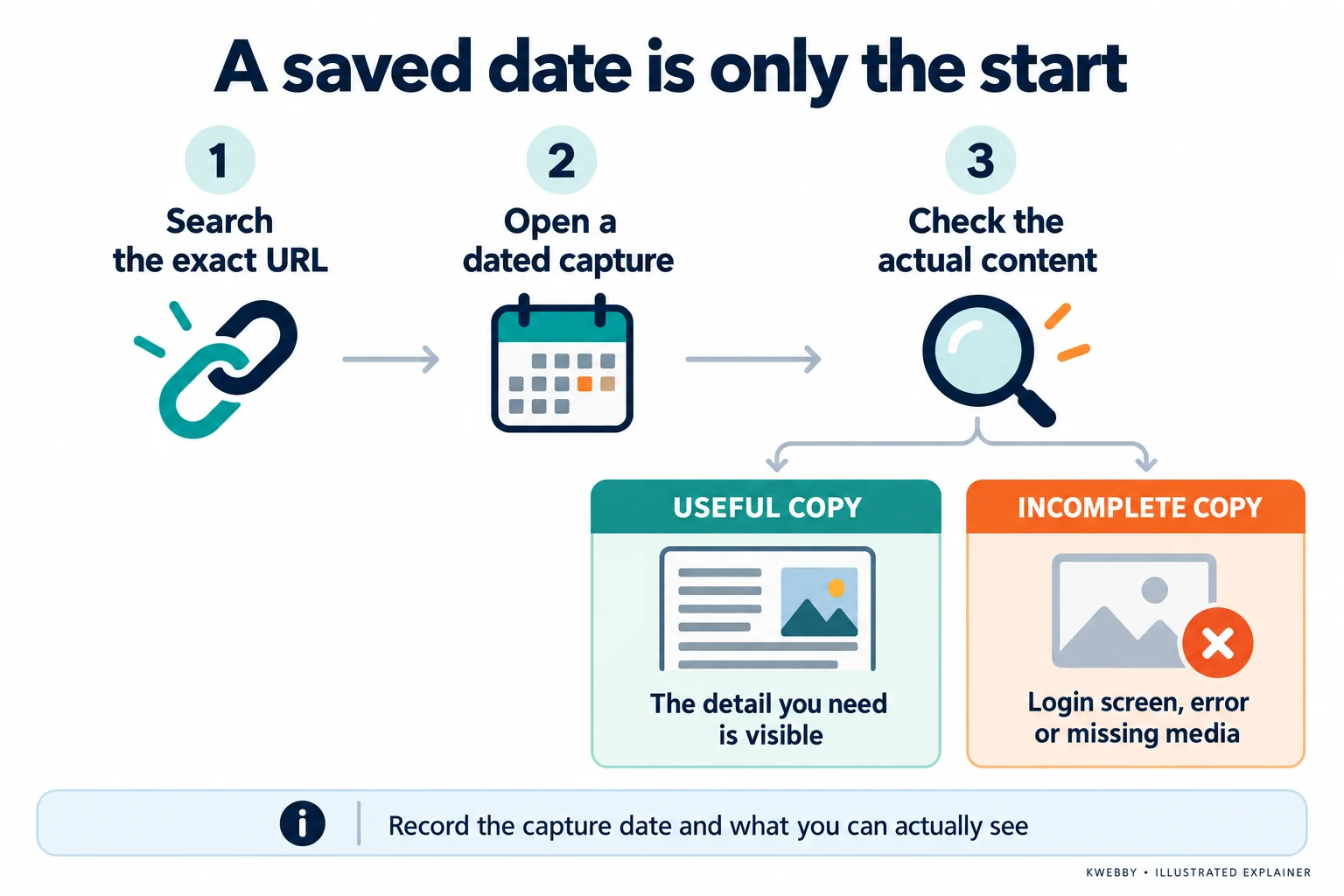
- Open the official Wayback Machine. Paste the exact Instagram URL into its search field and start the history lookup
- Choose a relevant year. If dates are available, select the period you want to investigate
- Choose a day and capture time. Start with a blue entry when available. Green indicates a redirect; orange and red indicate error responses. Blue still doesn’t guarantee complete photos or video
- Inspect the result. Check the account identity and the exact text or media you came to find
- Watch the timestamp when opening links. Navigation can move to another capture date or the live web
- Keep the archive link. Record the date shown and a short note about what is visible
The Internet Archive’s usage guide explains the calendar colours and date changes.
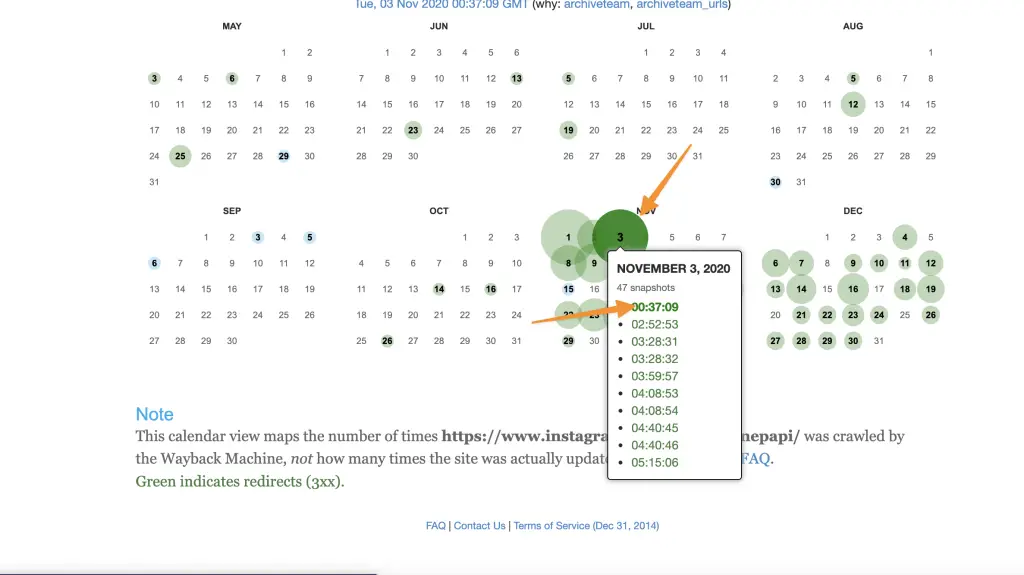
Before moving on, answer one question: can you actually see the item you need? If you only need the old bio and it’s readable, that may be enough. If you need the original photo and its space is blank, keep looking.
How to Tell Whether a Snapshot Is Useful
I’d make a short record with four things: the account, the original URL, the capture date, and the exact detail visible in the copy.
For a photo, inspect the photo itself. A caption or an empty image box doesn’t show what the missing picture contained. For a video, check whether it plays rather than treating its thumbnail as a saved video.
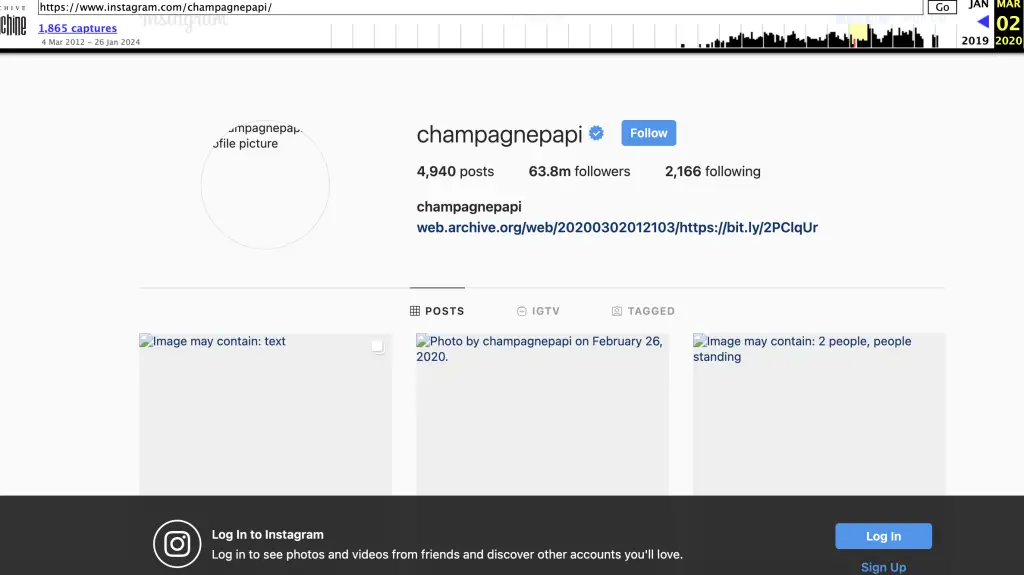
That distinction matters when sharing what you found. Say that a particular snapshot displays a number or phrase. Don’t turn one capture into a complete account history or a claim about what the account shows today.
Keep your checking date separate from the archive’s capture date. A page viewed today can contain material saved years ago.
Why You See a Login Page, Blank Screen, or Missing Photos
Instagram pages depend on several parts loading together. A saved page can lose useful content when those parts weren’t collected or can no longer replay.
No captures appear
Check the spelling and look for the original link. If you know an earlier username, search that address separately.
A missing result tells you that this lookup didn’t produce a usable record. It doesn’t establish that the account or post never existed.
The snapshot opens a login screen or error
The archive may have saved an access response instead of the content you wanted. Signing in to Instagram now won’t add a missing historical photo to that saved response.
Try another available capture from the relevant period. If the same problem persists, switch to an original file, another public reference, or the owner’s recovery options.
You only see the Instagram logo
Archive-It’s Instagram guidance, updated July 7, 2025, reports blank-logo replay for recent captures and limits affecting older feeds. It also identifies login and 429 error responses as collection failures. See Archive-It’s documented issues.
That guidance concerns Archive-It’s collection service. It isn’t a fresh test of every public Wayback snapshot, but it’s a useful warning that a logo alone doesn’t mean your posts are available.
The text loads but the pictures don’t
Treat it as a partial result. Save the text if it answers your question, and check the individual post address if you have it.
There is an advanced exception worth knowing: the 2024 research above found useful metadata in some older captured source files, even when the visible replay was blank. Its parser covered older page formats through June 2018. That’s a research route for specific historical captures, not a one-click recovery tool.
The date changes after you click a post
Check the new archive address and toolbar before making a note. Record the date actually associated with the page you’re viewing.
If the relevant snapshots keep showing errors or missing content, I’d stop cycling through them and try the next route. Repeated clicks won’t create a copy that wasn’t preserved.
Looking for Your Own Deleted Instagram Content?
If it’s your account, I’d check Instagram before spending more time in web archives. First work out whether you archived the item, deleted it, or still have its original file.
Check Archive for content you hid
An archived post may be missing from your public profile while remaining in your account’s Archive. Check the relevant posts or Stories area while signed in to the correct account.
Instagram provides separate guidance for archived posts and Stories Archive. Use those instructions if your app’s menu differs from an older tutorial.
Check Recently Deleted promptly
If you deleted the item, look for Recently Deleted in Instagram’s mobile app. Recovery is time-limited, and the rules can differ by content type.
Use Instagram’s official deleted-content recovery guidance for the applicable deadline and restore steps. Check this route promptly rather than waiting for a data export or paying someone who promises recovery.
Look for original files and account exports
Check your phone’s photo library, editing-app folders, computer, and existing backups. The original file may still be available even when the post is gone.
You can also consult Instagram’s account-information download guidance. An export can help you keep available account information, but it isn’t a promise to retrieve permanently deleted posts.
Settings labels may vary during Meta’s rollout: its April 2026 announcement says Accounts Center is gradually being updated to Meta Account. Follow the labels available to your account and the current official help. Read Meta’s announcement.
If you want a physical copy once you’ve found the pictures, our guide to printing your Instagram photos covers that next step.
What to Try When Wayback Has No Usable Copy
Search for another public reference
Try the exact post URL in a search engine, or a distinctive caption phrase in quotation marks. Check whether the creator shared the same material on their website or another public account.
Compare the wording, date, and author. A repost can be cropped, edited, or incorrectly attributed, so keep its source attached to your notes.
Check another archive with realistic expectations
Another web archive may contain a different saved copy. Inspect the actual item rather than relying on a search result or a service’s marketing promise.
I wouldn’t buy a screenshot or monitoring subscription just to retrieve a post that’s already gone. Ask the provider whether it has the specific historical copy you need, and request a viewable example before paying.
Ask the owner for a copy
For someone else’s missing photo or private post, a direct request may be the most useful next step. The owner might still have the original file even when no public archive does.
Don’t enter your Instagram password into a site claiming to reveal private profiles or restore any deleted post. A public archive doesn’t provide permission to access private content.
How to Keep a Useful Copy Next Time
For anything important, I’d keep a copy that opens without the original Instagram post.
- Store the original photo or video alongside its caption
- Add the account name, date, and source URL when they matter
- Keep a second copy in a backup location you trust
- Open a few saved files to confirm they work
- Review which files your phone and editing apps are actually saving
Our guide to Instagram’s camera-roll saving settings explains the saving controls, including how to turn them off. Check your current setting before assuming your phone has a copy.
An Instagram Saved bookmark still depends on access to the post. It doesn’t replace an independent file.
For a public page you have permission to preserve, Save Page Now is an option to try while the page is available. It captures a current page, can fail, and doesn’t reconstruct its past or automatically save a whole account. Inspect the result, and don’t submit private content to a public archive.
Frequently Asked Questions
Can I see deleted Instagram posts with the Wayback Machine?
Possibly, if a usable copy was captured before the post disappeared. A missing image or login-only snapshot can’t supply the absent post.
Can I find an old Instagram bio or follower count?
Yes, if that detail is visible in a historical capture. Note the capture date and describe it as a snapshot rather than a complete growth history.
Does Wayback work with private Instagram accounts?
It doesn’t unlock private accounts. An account that was previously public may have a surviving public snapshot, but that doesn’t grant access to its private posts now.
Why is there a saved date if no post appears?
The archive can contain a redirect, error, login screen, or incomplete page. Open the result and check what it actually shows.
Can it recover expired Stories or deleted Reels?
Don’t rely on it for either. Owners should check the relevant Archive or Recently Deleted area and their existing files; a public archive lookup depends on the exact material having survived.
Will downloading my information restore deleted posts?
Don’t treat an export as a recovery guarantee. Check Instagram’s recovery option first, then use an export to preserve the available information it provides.
What if I don’t know the old username?
Look for old links in bookmarks, messages you already have, or public references from the relevant period. Verify the account identity before relying on a matching name.
Is there an Instagram archive tool that always works?
No tool should be treated as a guarantee that a missing item can be recovered. Choose a method for your goal and inspect the actual copy before relying on it.
Final Thoughts
I’d start with one exact URL and one clear question. Check whether the snapshot contains the detail you need, then keep its link and date if it does.
If it doesn’t, try your account’s recovery options, original files, or another public reference. Once you find something worth keeping, save an independent copy so you don’t have to repeat the search.